Showing posts with label Culture of India. Show all posts

Tuesday, December 1, 2009

Cultural Heritage Of Chandigarh

Indian culture has been generally marked as a blend of a wide variety of cultures from across the world. Chandigarh is one of most well-planned cities in India, which was designed by the renowned architect, Le Corbusier. The rich culture of the city stands on the multi-ethnic population.

Cultural Heritage Of Chandigarh

Chandigarh which is a land of fairs and festivals observe people celebrating Baisakhi, Gurpurab, Holla Mohalla, Lohri, Tika, Karva Chauth, Raksha Bandhan, Dusshera and Diwali with great zeal and enthusiasm.

Chandigarh cuisine offers an exquisite epicurean experience. The traditional cuisine of the place consists of typical Punjabi food, which is spicy and crunchy. The people here are very fond of desserts too.

The majority of people here in Chandigarh are Hindus and Sikhs, you can also find population of Jains, Muslims, Christians, etc here. Sikhism and Hinduism are the major religions followed in the city. Other than this religions like Islam, Christianity, Jainism and Buddhism, also flourish in the city.

Chandigarh has a rich tradition of folk dances. Bhangra, Giddha, Jhumar, Luddi, Julli, Dhamal, Sammi, Jaago, Teeyan, Dankara, Kikili and Gatka are some of the popular folk dances of the city.

Beauty lies in the eyes of beholder. Culture defines itself as a social scheme of shared notions, values, rituals and behaviour patterns that are practiced within a community. So lets discover the cultural heritage of this city.....

Reblog this post [with Zemanta]

Wednesday, October 14, 2009

Devigarh Fort

India is well established with the rich culture and traditions. The Indian culture helps to know more about Indian cultural heritage through fairs and festivals, arts and crafts, language and literature, Indian cuisine and diverse religions.

Devigarh Fort


Devigarh is a fort palace which is situated in the old Aravali Hills of Rajasthan. Devigarh is an 18th century fort palace in the village of Delwara near Udaipur in Rajasthan. The city has a rich cultural heritage.

The village of Delwara, which comprises of the Devigarh Fort takes pride in housing four 14th Century Jain temples. It is a 450 year old village and consists of Muslims, Jains, Rajput and tribal people.

Devigarh palace is about 45 minutes drive from Udaipur and has good transportation networks. Udaipur has road, rail and air network with all major cities in India. The major attractions to Devigarh palace include:

Bapparawal which is a small lake which is about 3 km from Devigarh Fort.

Udaipur is about 40 minutes drive from Devigarh Fort and is one of the most beautiful cities in India.

Eklingji being a temple complex it consists of 108 temples made of sandstone and marble and is only 5 km away from Devigarh.

Ranakpur city is situated about 110 km from Devigarh has some of the beautiful Jain temples with excellent carvings that with no doubts depicts the beauty of Indian craftsmanship.

Nathdwara has a 18th Century Temple that is dedicated to Shti Nathji and Nathdwara is just 24 km away from Devigarh fort.

Nagda near Devigarh has a cluster of temples with stone carvings. It is situated about 6 km from Devigarh.

Devigarh fort palace has turned into a luxury hotel today and it gives a clear picture of the cultural heritage of Rajasthan.

Reblog this post [with Zemanta]

Tuesday, September 15, 2009

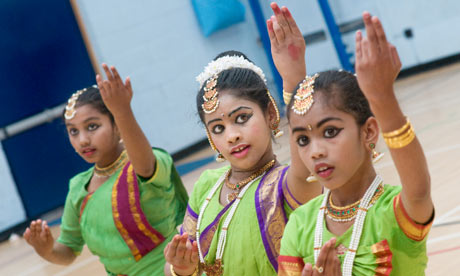
Classical dances reveals the cultural heritage of India

Classical dances quiet clearly reveals the cultural heritage of India. In India each dance form will have its own specialty and grace, along with a set pattern of costumes and make-up.

These different form of classical dances set the true meaning to the glory of India.

Bharatanatyam is the most popular of Indian dances and belongs to the South Indian state of Tamil nadu.

Bharatanatyam

It is believed that Chakiarkoothu dance was introduced to Kerala and is performed only by the members of the Chakiar caste. This is a highly orthodox type of dance which is staged inside temples only.

The Chhau dancer very well communicates the inner emotions and themes through cadences of body flexions, movements and kinetic suggestions.

Another classical dance form is Kathak where the themes of Krishna, Radha, Shiva, Parvati and mythological characters find a exact place.

Kathakali is a story play or a dance drama. Kathakali is limited to decorative dance movements.

Koodiyattam is the oldest surviving link with ancient Sanskrit theatre that is practised in Kerala. This dance form consists of some popular Sanskrit dramas like Ascharyachudamani of Shaktibadra, Subhadradhananjeyan of Kulasekara Varman, Abhisekha Nataka and Swapnavasavadatta of Bhasa, Kalyana Saugandhikam of Mahendra Vikrama and Bhagavadajjukiyam of Bodhayana.

Krishnattam presents eight successive nights that reveals the entire story of Lord Krishna, and the dance style is almost alike Kathakali.

Kuchipudi, like Kathakali is also a dance-drama tradition which derived it's name from the vilage of Kuchipudi in the Southern State of Andra Pradesh. The female roles are also enacted by men till date.


Manipuri dances are a part of the daily life of the Manipuri people. This dance is presented as a group dance with gorgeous, colourful costumes with soft movements.

Mohini Attam as a dance form has developed in Kerala. This dance form is performed by women. Mohini Attam follows the Bharatanatyam dance form.

Odissi is considered as the oldest classical Indian dance on the basis of archival evidence.

Ottan Thullal is performed solo and it is also known as the poor man's Kathakali.

Yaksha Gana belongs to Karnataka which has a rural origin. Its heart lies in Gana meaning music. It is about 400 years old.


Every part of a dance conveys some meaning in the graceful motion of a dancer. The various dance forms have also developed a particular form of make-up for the performance, which is a skill by itself. Each dance form and style have their own traditional patterns set down.

Wednesday, September 9, 2009

A heritage destination- Thousand Pillar Temple

The Rice Bowl of India Andhra Pradesh is a blend of dances, delectable cuisine, ingenious arts and crafts, glorious religions, sculpture and wonderful people. Temples also play an important part in exploring the cultural heritage of the state.


Many grand stone temples still stand in South India. Apart from the main fixed stone deities, processional deities made up of gold, silver, copper, zinc and tin are bathed, dressed, decorated for various festivals throughout the year.

The richer the temple, the more elaborate the festivals. Temples also reveal the cultural heritage of South India as temples often vary in their appearance, rituals, traditions, festivals and customs from region to region.

Approximately 4 kms from Hanumakonda crossroad the Thousand Pillar Temple in Warangal district is located which is a fine specimen of architecture and sculpture. It is the main attraction of Hanamkonda. The temple was built by 'Rudra Devi' in 1163 AD.

The temple very well helps to reveal the South Indian culture and it is constructed in a star shaped design and has 3 shrines dedicated to Lord Shiva, Vishnu and Surya.

The temple is built on a 1 m. high platform on the slopes of the Hanumakonda hill and has a majestic monolithic Nandi. There are many small lingam shrines that surround the gardens.

The temple is famous for its richly carved pillars, screens and detailed sculpture. The culture of Andhra Pradesh is an integral part of the rich cultural heritage of the country. Come and worship to fulfil your dreams at Thousand Pillar Temple.
Reblog this post [with Zemanta]

Friday, September 4, 2009

Tirupati Balaji Temple- Heritage Destination

Hindu temples are large and magnificent with a rich history. The temples of Andhra Pradesh State not only consists of religious but also historic value and are rich in their cultural heritage.

Tirupati Balaji Temple


Some of the famous temples in Andhra Pradesh, are Lepakshi Temple, Thousand Pillar Temple, Tirupati Temple, Srisailam Temple, Mukhalingam Temple, Jain Mandir, Chennakesava Temple, Gunupudi Someswara Temple, Chennakesavaswami Temple, etc are some of huge importance.

Tirupati Balaji Temple is one of the most visited temple of India and this temple is also of greater significance in the country. The Tirupati Balaji Temple is one of the most important Hindu pilgrimage centre that is mainly linked up with Hindu mythologies, the temple is famous for its historic shrine of lord Venkateswar.

This temple is located on the Venkatam Hill and the temple is one of the richest temples of the country. The main deity worshiped at the temple is lord Venkateswar or lord Balaji, who is believed to be the incarnation of lord Vishnu, one of the most revered Hindu god.

The architectural style adds more importance in the temple's glory. The 10 feet high standing figure of lord Venkateswar on a lotus pedestal embodies the best sculptural work. Worshiping before the holy figure of lord Venkateswar lets one witness the rich South Indian culture and rich traditions.

There are also several other temples like Papavinasanam, Vaikuntha Tirtham and Tumburu Tirtham famous for sightseeing. Come and make a wish.

Reblog this post [with Zemanta]

Friday, August 28, 2009

Indian dance and culture

India cultural heritage is unique because of its diversity and variety in physical, religious, racial and artistic fields. In India religion is believed to be a way of life.

Indian dance


Many dances, theatrics and folklore are religious and based on Indian mythology and a person can very well understand the culture of India. Indian tradition of theatre is rich and comprises with the ancient rituals of the country.

Dance has played an important role in the birth of theatre. There are many kinds of folklore depending on certain content such as festival songs, work songs, marriage songs etc. Festival and religious songs are usually accompamied by a suitable dance form.

It is believed that Lord Brahma created Natyaveda. Sage Bharata who wrote Natya Shastra which is a great comprehensive work on the science and technique of Indian drama and through this medium, common man was presented with the Ithihasas, Puranas, and Mythology.

Reblog this post [with Zemanta]

Monday, August 10, 2009

Cultural Heritage of India

India's culture is one of the oldest and unique. The South, North, and Northeast have their own distinct cultures and almost every state has carved out its own cultural niche.

There is hardly any culture in the world that is as varied and unique as India. India is home to some of the most ancient civilizations, including four major world religions, Hinduism, Buddhism, Jainism and Sikhism.

Cultural Heritage of India


A combination of these factors has resulted into an exclusive culture- Indian culture. Indian culture is a composite mixture of varying styles and influences. In the matter of cuisine, for instance, the North and the South are totally different.

Festivals in India are characterized by color, gaiety, enthusiasm, prayers and rituals. In the realm of music, there are varieties of folk, popular, pop, and classical music. The classical tradition of music in India includes the Carnatic and the Hindustani music.
Reblog this post [with Zemanta]

Friday, July 31, 2009

Indian Cuisine-Another Cultural Heritage in india

The spices are the very essence of Indian cuisine and these colorful ingredients are what bind the rich Indian culinary tradition together. Like Indian culture, Indian cuisine has also been influenced by the outside invasions on India.

Indian Cuisine-Another Cultural Heritage in india


The cuisine in the northern and western parts of India is influenced by Central Asia while on the east and north-east of India in West Bengal and Assam respectively, the cuisine show the shades of East Asian cuisine.

The heritage tour of India is the perfect way to savour the taste of India. Indian heritage does not only include art, architecture, dance and handicraft but also the cuisine that reflects the eating habits in different regions of India. That is what makes India a different palce to live in..

Indian Cuisine-Another Cultural Heritage in india


If you paln a tour to India it is not complete without savouring the flavours of India. So, whichever part of the country you travel, you will find a cuisine or delicacy exclusive to the region. If you are in the northern parts of the country, Mughlai cuisine is worth checking out.

On the southern side of India, one gets a variety of gourmet dishes that differ from state to state. Hyderbad in Andhra Pradesh is popular for its biryanis while Kerala is known its dosas, uttpams idlis and vadas. Sambhar is another popular delicacy in South India particularly in Kerala.

India has a variety of street food too. The street food in India is not exclusive to one particular place or region. One can find rows of street vendors virtually anywhere in India serving sumptuous delicacies.

Most Indian hotels serve different cuisine from different corners of India. Some of them even have speciality restaurants that serve the cuisine of a particular region. Come and tickle your taste buds with Indian cuisine on your journey to India with Heritage in India.

Reblog this post [with Zemanta]

Tuesday, July 28, 2009

Customs and Rituals in India

The diverse, wide culture of India makes it the most unique country in the world. India is a melting pot of different faiths and religions. Customs and rituals are an integral part of the Indian way of life.

Customs and Rituals in India

These customs and traditions are surrounded by the boundary of religion, cast and creed. Customs and rituals of India are what attract many tourists to this myriad land.

One gets a glimpse of the customs and rituals in India as soon as one is welcomed in traditional Indian style. Even the Tourism Ministry, Government of India has launched the 'Atithi Devo Bhava' campaign to make people aware of India's rich cultural heritage and the philosophy of treating a tourist like God.

Indians are steeped into various customs and traditions. Right from the birth to death, there is hardly any occasion that does not have an elaborate ceremony.

Soon after the birth of a child, an elaborate ceremony to name the child takes place, which is marked by chanting of slokas and singing of hymns. Weddings are grand affairs in India, as they follow various customs and rituals.

So much so, many foreigners come to India to marry in Indian style. Rajasthan is the place that is most popular for royal weddings in India.

Even cremation is done according to rituals after one passes away. Taking a heritage tour to India is one of the best ways to know more about the fascinating aspects of Indian customs and rituals.

Festivals are other important occasions when one can see different customs and rituals followed by people. Plan a fascinating journey to the myriad land of different faiths and unique cultures with Heritage in India.
Reblog this post [with Zemanta]